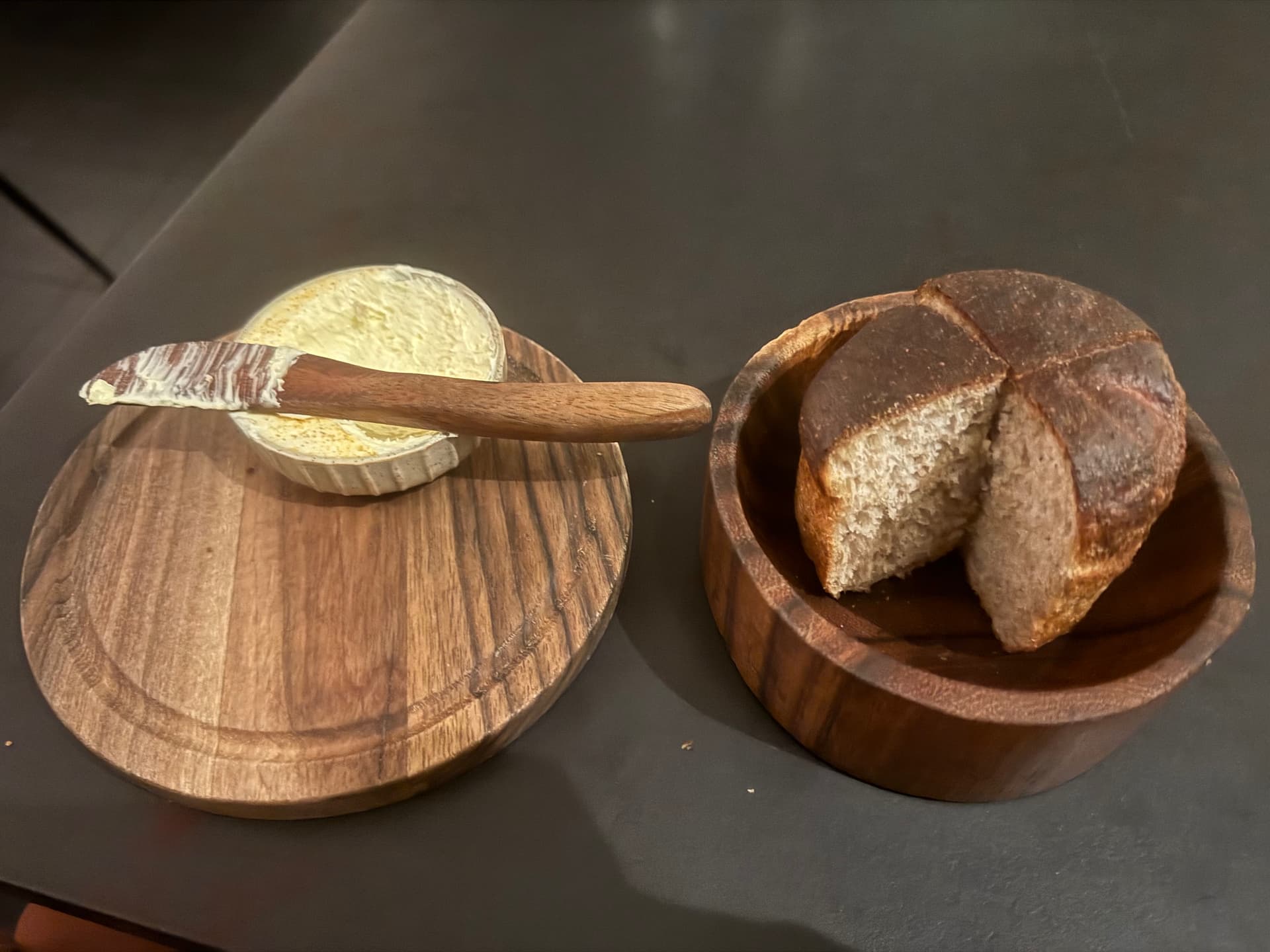
Despite (or in convention to) a lot of initial buzz in the press and on this board, I haven’t seen a lot of talk or reports about Tomat in Westchester. By my searching on this thread, the last time it was mentioned was in the June 2025 Rundown thread by @doublestuffedpierogi, where the crispy liberty duck with walnut mole was celebrated. I’m happy to report that that dish remains, as well as that our visit last night was a worthy competitor for one of the best bites in LA of 2025.
Wiser heads might enlighten me, but one of the foremost hypotheses for the glaring absent attention might be its location. Indeed, the aforementioned post even couches the restaurant’s value by pointing out its convenient proximity to LAX. We drove fifty minutes from northeast Los Angeles on a Saturday night to find the restaurant near the Del Taco we’d stopped at after retrieving our car from LAX recently; a short and stout shopping street the length of a 1/4 city block (on which The Ramen Joint lives) end-capped by a well-kept general interest book store, The Book Joint; and the “sprawling” shopping center a parking lot that, on one end, looks out onto a Staples, lonely and isolated in the evening as if a memory of busier times; and on the other, an illustrated red neon tomato illuminating the restaurant during the evening.

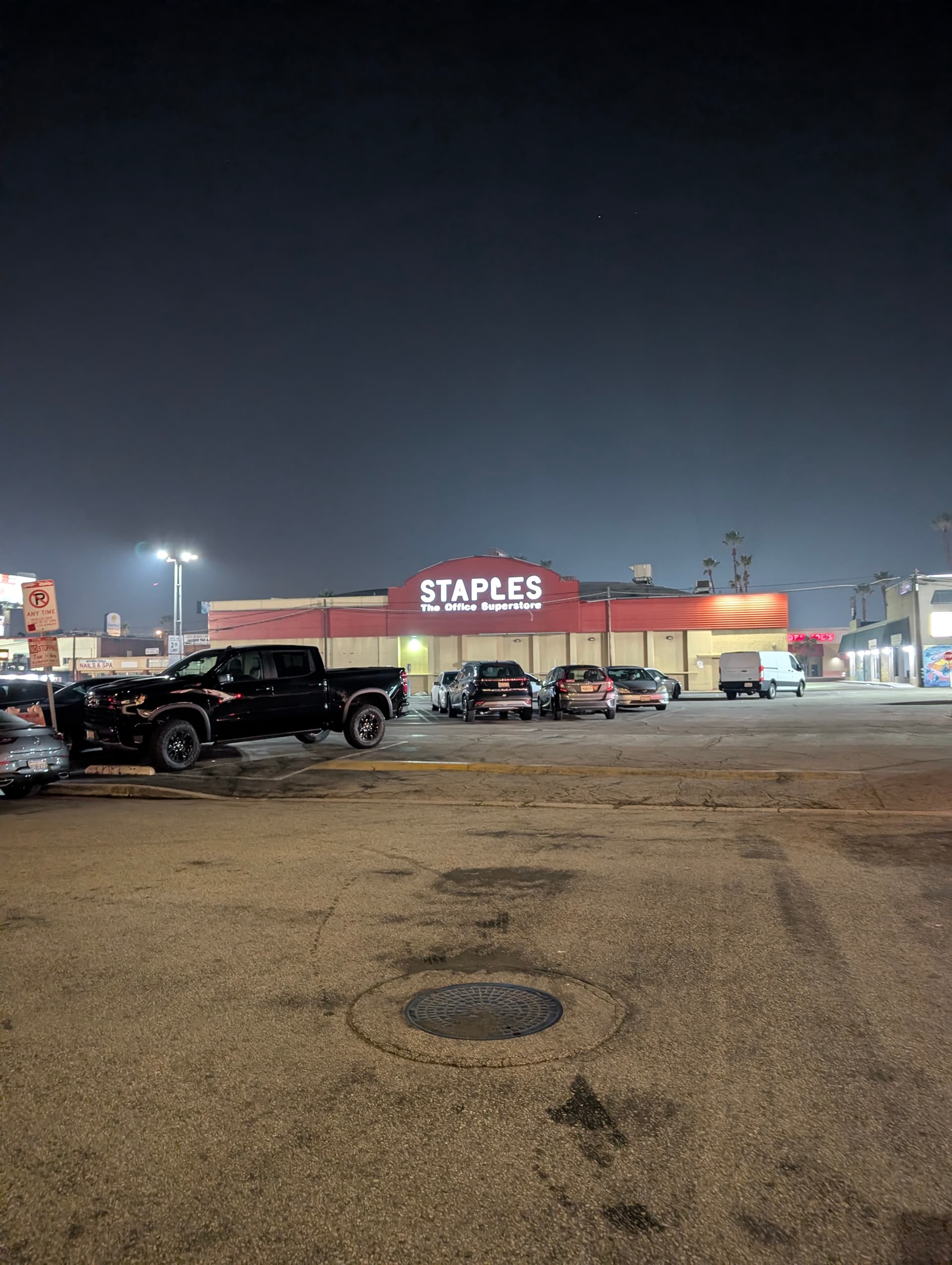

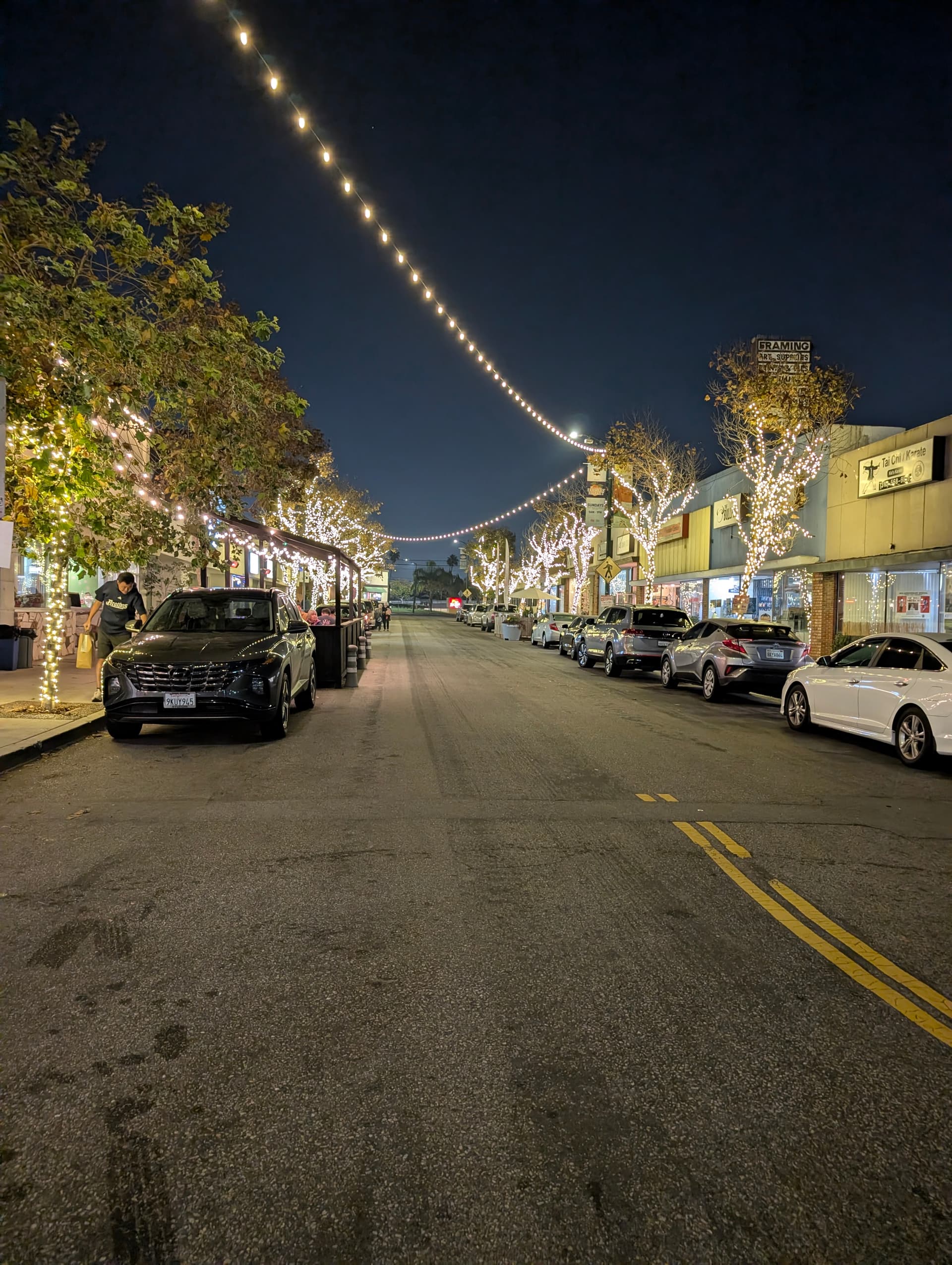
According to the “schlep-o-meter” on the Air Jordan podcast, Tomat certainly has its challenges. But on terms of its menu and its execution, from ingredients to preparation to service, of its aesthetic program, Tomat deserves to stand proudly next to its peers like Baby Bistro in presenting its southern Californianized-via-London farm-to-table cuisine. As covered in Kelly Yeo’s 2024 review, a not-insignificant portion of its produce is grown locally on a converted parking lot near the In N Out. On the menu, the saffron rice is identified as “house-milled.” Manager Miley informed us that so too is the flour for the Barbari bread, which serves on three of the appetizers, including the Welsh rarebit. Its relative remoteness almost becomes its initial charm; for a brief moment, I felt that I was going out of town, arriving at a destination pined for.
The restaurant is one long hall. The left side houses the cafe and pastry case that functions as the daytime cafe concept. Deeper into the room is the large open-plan kitchen. The dining room begins at the bar that faces it, the tables on the right side a mix of four- and six-tops, and two-top benches. At the end of the room is an accommodating corner booth that sat a party of six comfortably, with plenty of elbow room. The decor, for me, was neither nostalgic nor frustratingly hip. Clean balanced lines across modern takes on mid-century favorites. The best feature of the dining room was that it was properly dampened – the ceilings and upper walls are all lined with acoustic paneling to dull the sound. That night, the dining room only got to 70% capacity, and there were only a few minutes of it being a little too loud.


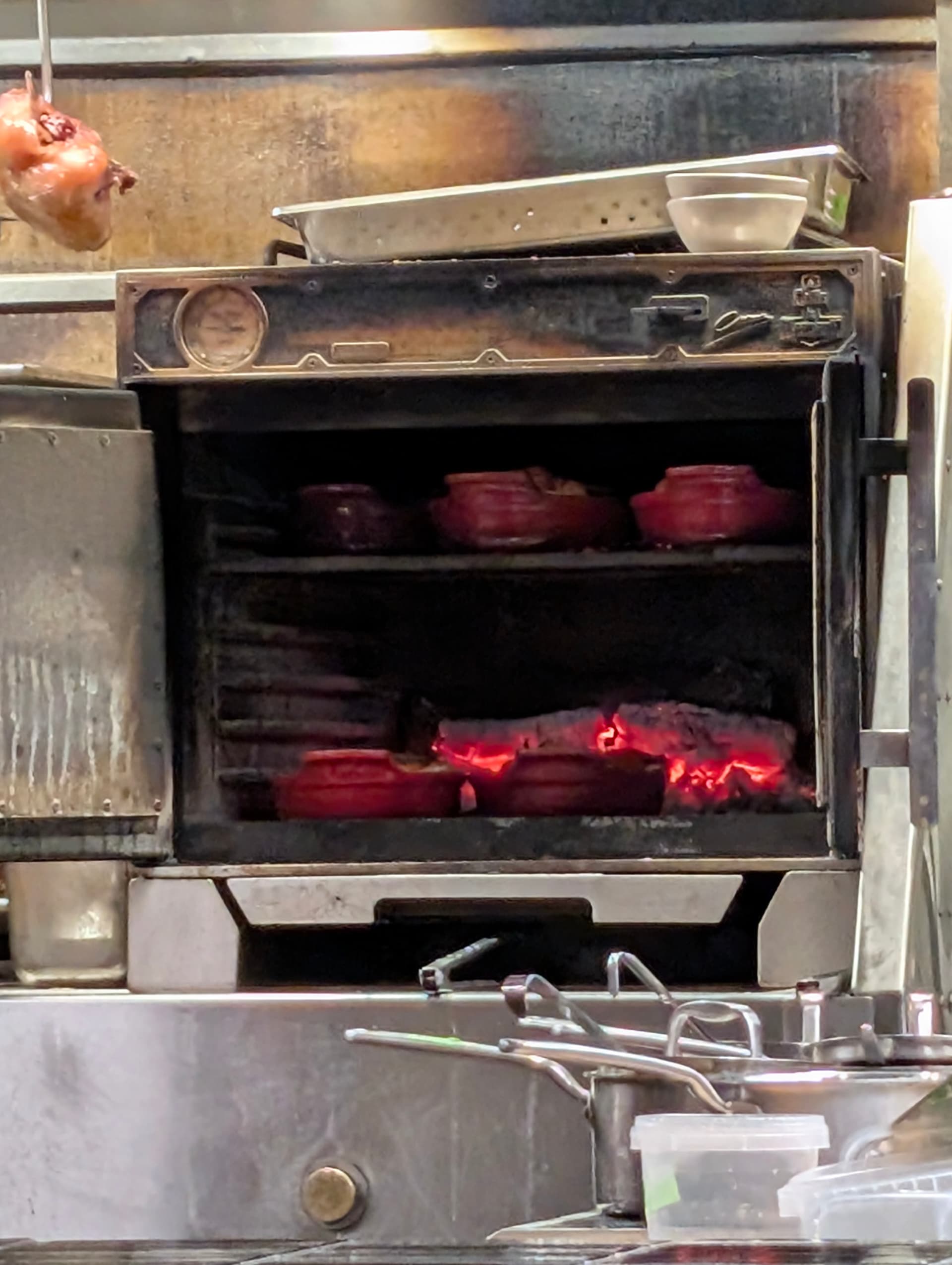

We were sat on the benches. We didn’t explore much of the wine menu, but there were several pages behind the cocktail and the by-glass lists. Pardon the blurry menu.
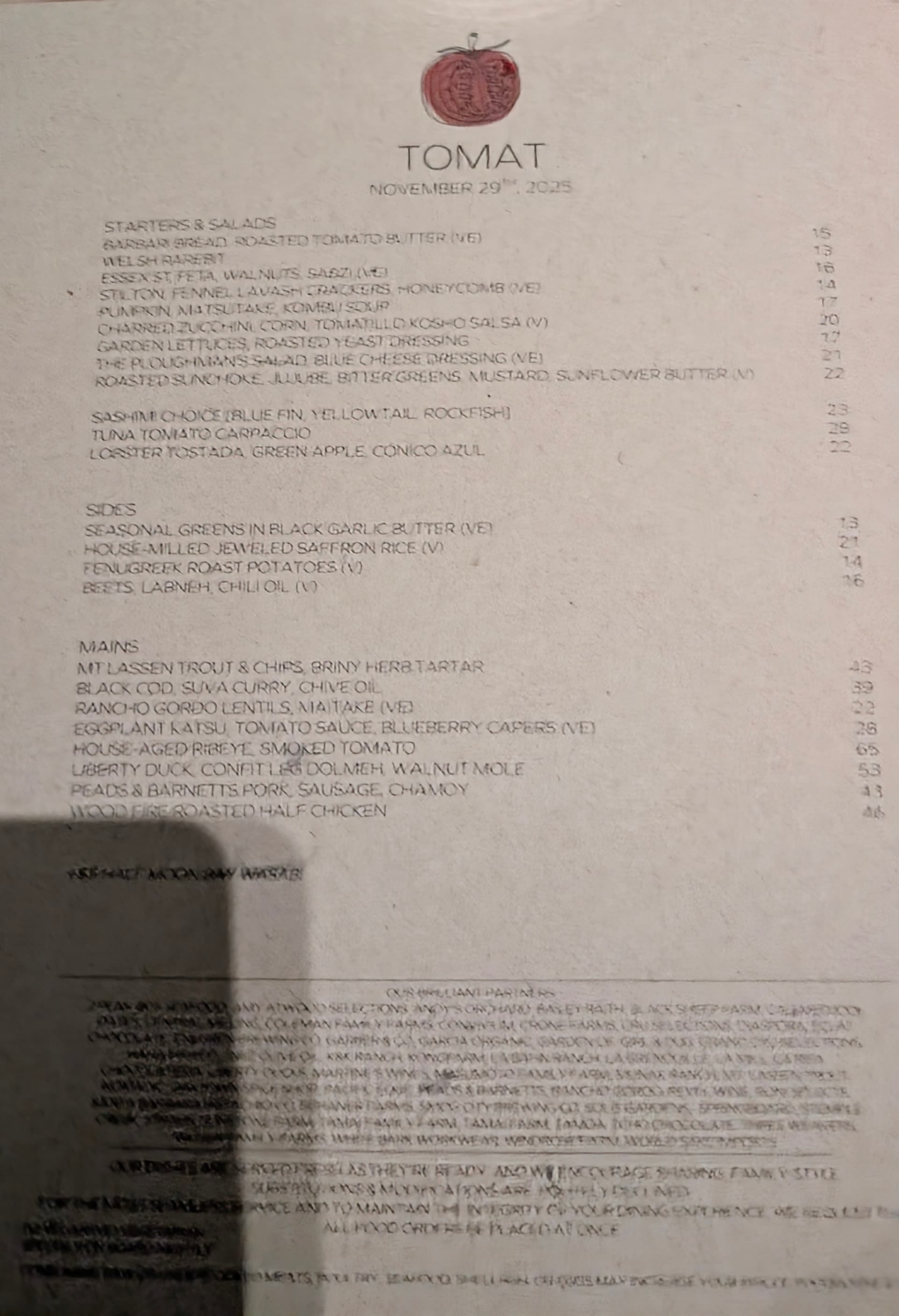
Previous coverage points out the international composition of owner and chef Harry Posner’s menu, citing his Persian heritage, Irish culinary training, London living, and he and his wife and co-owner’s Natalie Dial’s shared experiences traveling in Japan and elsewhere.
Our order:
Cocktails/drinks
London Fog
Maize
Seafarer Kolsch
Starters
Welsh rarebit
Roasted sunchokes
Sides
Saffron rice
Mains
Crispy duck
Trout & Chips
Dessert
House-made madeleines
Fig-leaf gelato, with honey and “backyard” honeycomb (NB: Didn’t get the menu but we recall “backyard” in its description).
For two people who were hungry, this was a lot of food. We took home 2/3 of the saffron rice and a few pieces of the trout & chips.
#1: Cocktails
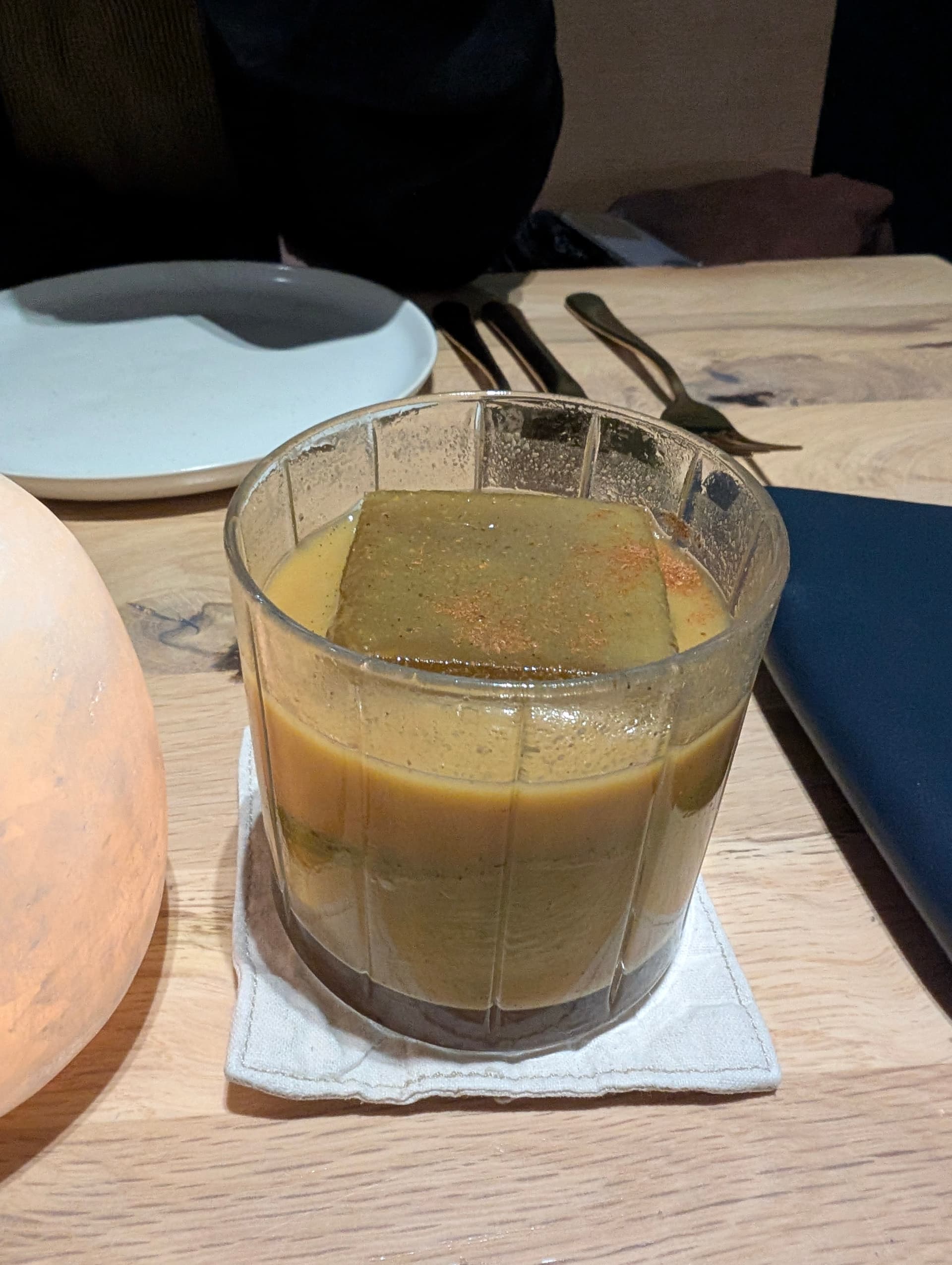
(Maize: Not on web menu, but we recall tequila, jalapeno, corn, cinnamon, egg white. Not our favorite, though decidedly a “fun” drink)

(London Fog: FUTURE GIN, CAMPARI, SWEET VERMOUTH, EARL GREY. Certainly more our speed, boozy and herby.)
#2 Starters

(Roasted sunchoke salad: jujubes, shiso, parsley, mustard, pumpkin seeds, sunflower butter)
Really solid room temperature salad. Tangy mustard and vegetal herbs lighten the starchy sunchokes. Even, balanced seasoning throughout. A couple were a little under, but just so. I would want to eat this weekly.
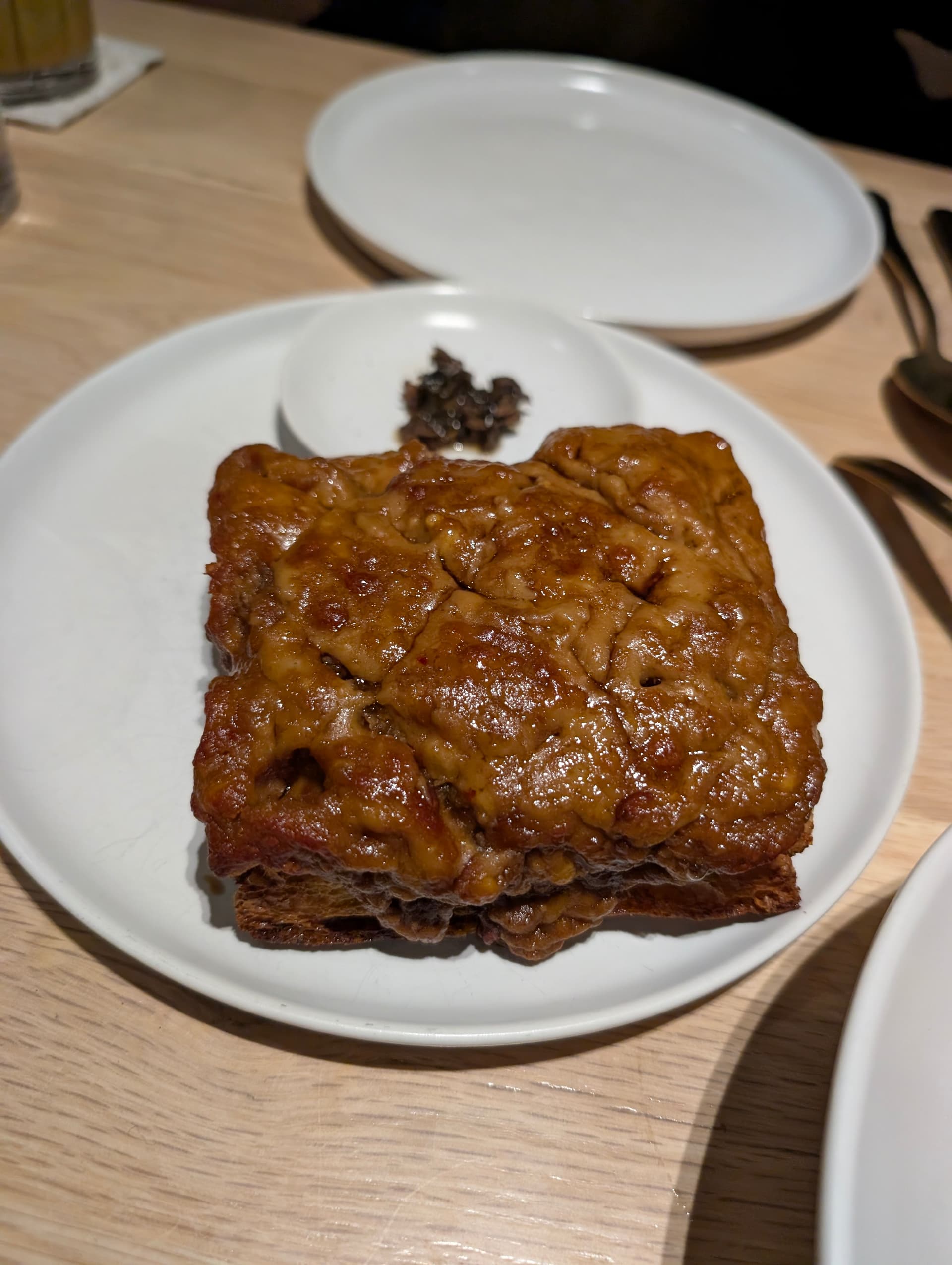
(Welsh rarebit: fontina cheese, barbari bread, pickled walnut skins)
What you see is what you get, though the picture doesn’t serve the bread well. Foccacia-like crumb with plenty of bounce and feedback, a great vessel for the savory-sour cheese. But this dish was pretty one-dimensional without the pickled walnut skin topping, of which there is an obvious dearth. In the context of the menu and neighborhood restaurant concept, I get that the menu is mixing accessible, approachable, but also novel, dishes, but I don’t think one would lose that by 1) featuring the very delicious pickled accoutrement in the menu description, in whatever form it seasonally takes, and 2) providing more of it. It would dress up the humble dish just enough to fit in with some of the higher-stakes cooking.
#3: Sides and Mains
The rest of our order came out together, with a gap of about 20 minutes between servings. There was no plate change; our plates were not sauced-up, and we didn’t ask for them, and I could have gone either way in this case. Though this year, I’ve become convinced that a plate switch between first and second courses is warranted.
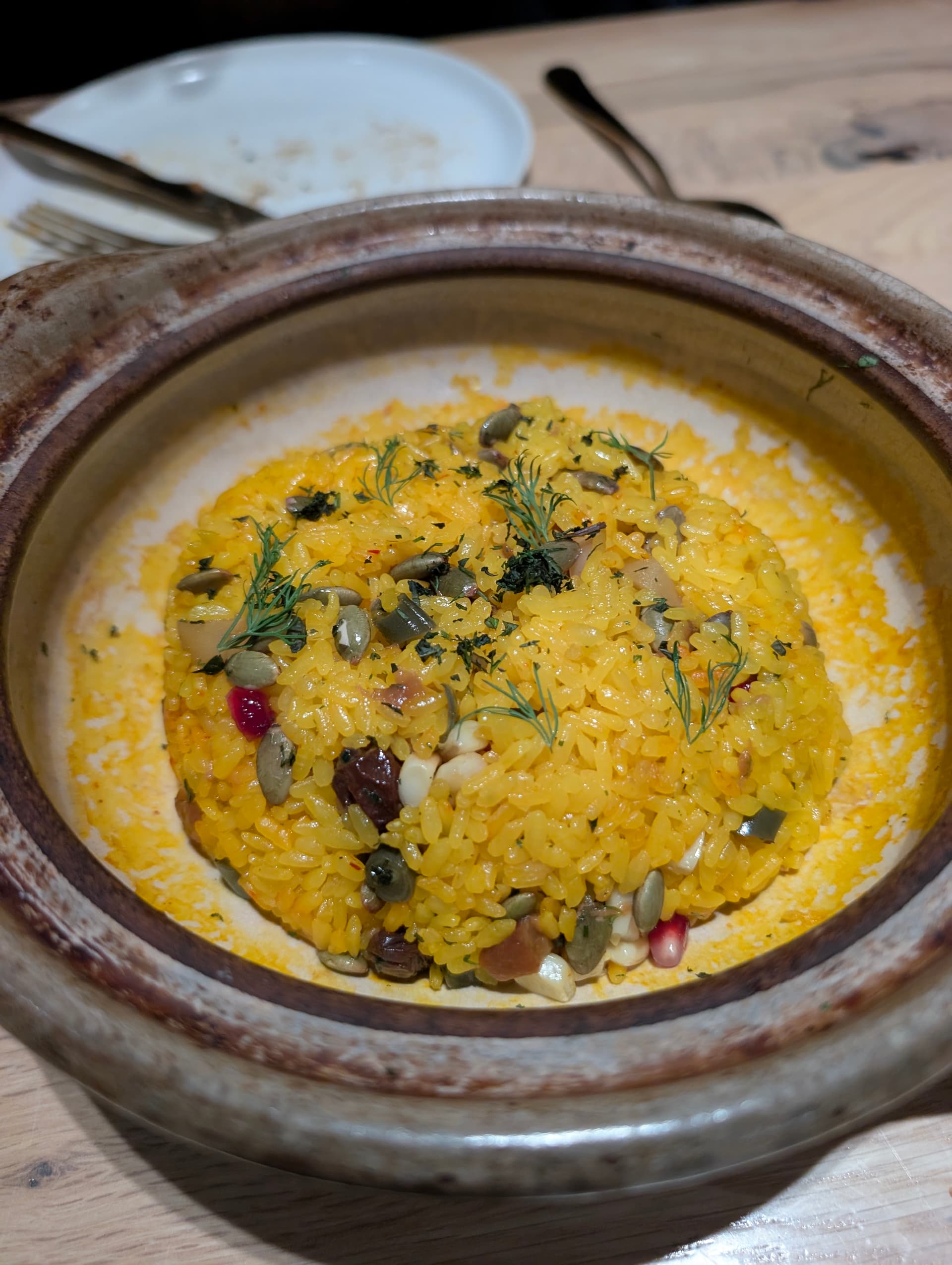
(Saffron rice: House-milled medium/short-grain rice, pomegranate seeds, currants, pumpkin seeds)
This was Top 3 dish of the night. Cooked perfectly to order in a donabe, each grain of the rice was distinct, chewery, and buttery, with enough stick to be coherent in the whole. I hope this rice never leaves the menu. As mentioned: House-milled! Incredible rice.

(Tempura-battered trout with vegetable tempura chips: mushroom, sweet potato (or yam?), broccolini, and a mystery vegetable; briny tartar sauce)
Very solid tempura batter – loved the seasoning on it, with maybe a dash of old bay seasoning in it. The broccolini was a little overdone, but in the whole, this is a successful dish: Light and airy fry; herby and refreshing tartar dip; and the trout was fantastic, even after for leftovers in the air fryer. But against the other main we had, this read a bit too straightforward.
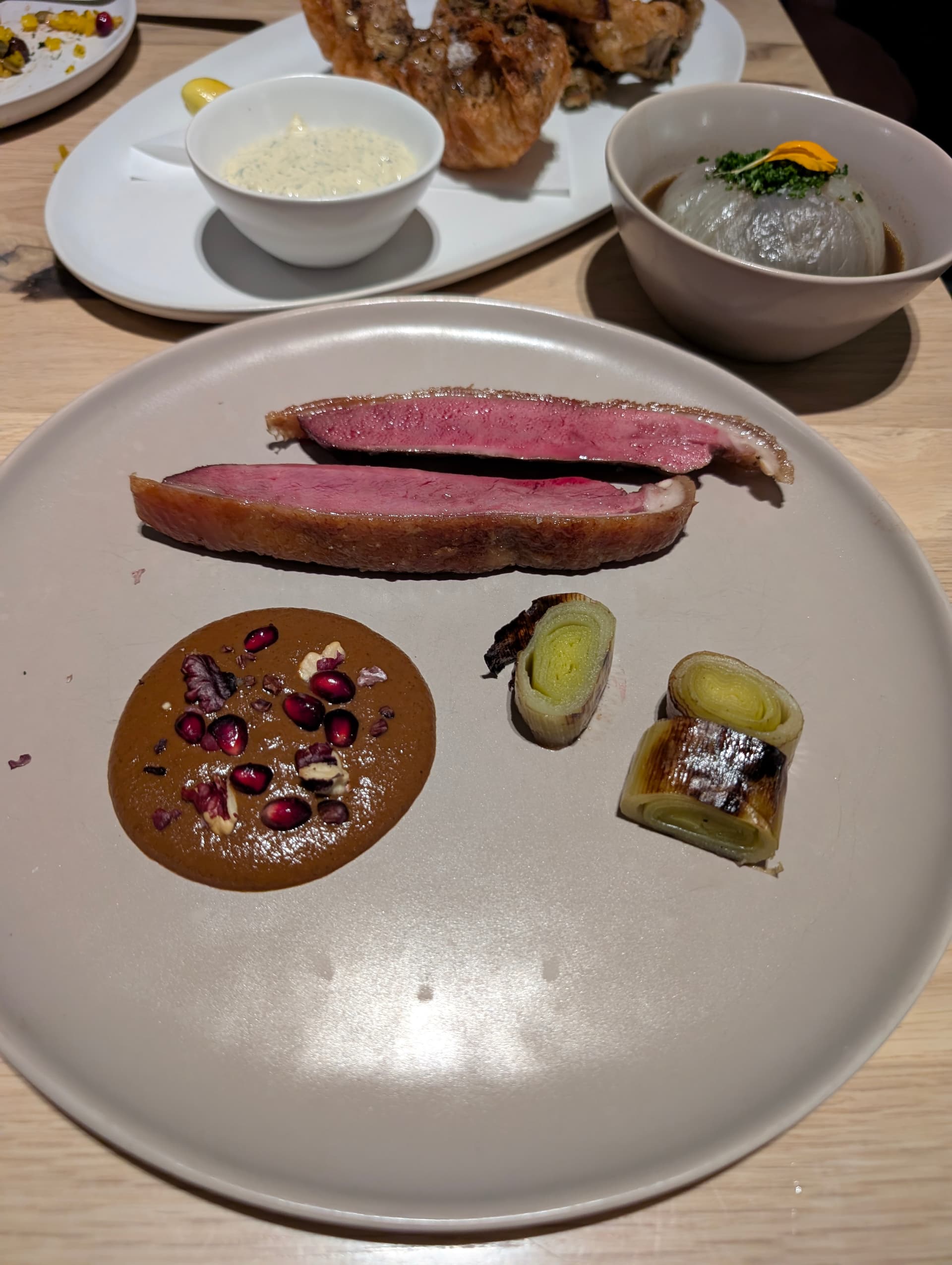
(Liberty crispy aged duck with walnut mole; duck leg confit “tamale” in broth)
This one regularly comes up on press reviews; it is featured on the Michelin guide as a not-miss order. I would echo that sentiment. Fantastic prep on the duck breast, dry-aged for at least a day, resulting in a thin and crispy skin that was also forgiving on first bite. As evinced from the pictures, as pink as you’d like throughout. The walnut mole had a mellow sweetness with a moment of fruity punch, thanks to the pomegranate seeds. But what puts this dish over the top is the duck leg confit accompaniment, which seems to have appeared in various preps (cabbage wrap, dolmeh). Ours was a blue-corn masa shell, itself encased in an onion. Upon separation is the shredded duck leg confit filling that submerges itself in the small pool of broth.

I forthwith made a bite with the rice:

The duck breast slices on their own could be an underwhelming QPR. However, the accompaniement is a worthy element to make this a stand-out main. Top dish of the dinner and absolutely should not be missed upon your visit. When we return, we’d probably order two of these, and either the Peads & Barnetts pork, or the half-roasted chicken.
#4: Dessert
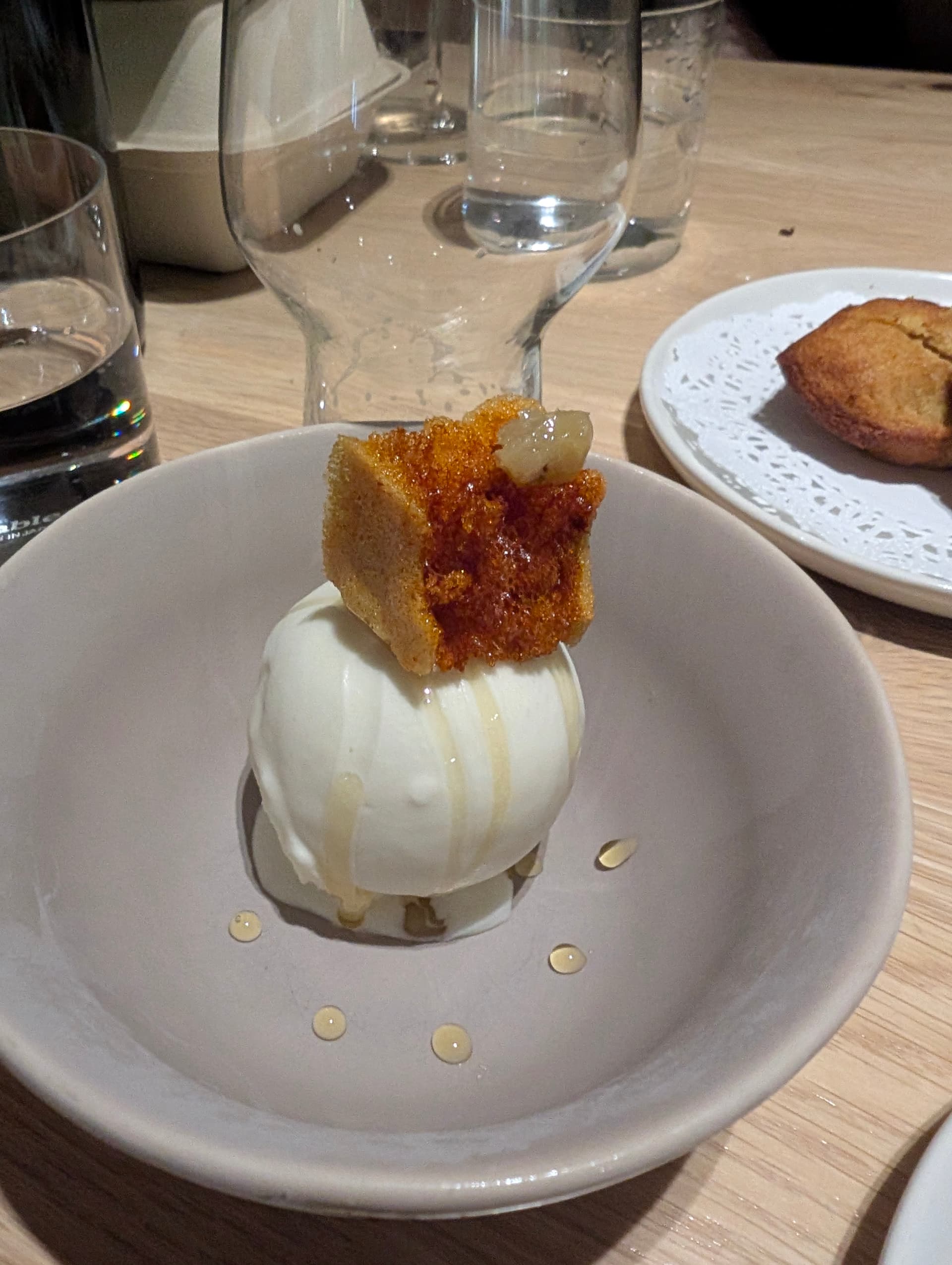
(Fig-leaf gelato with backyard honeycomb)
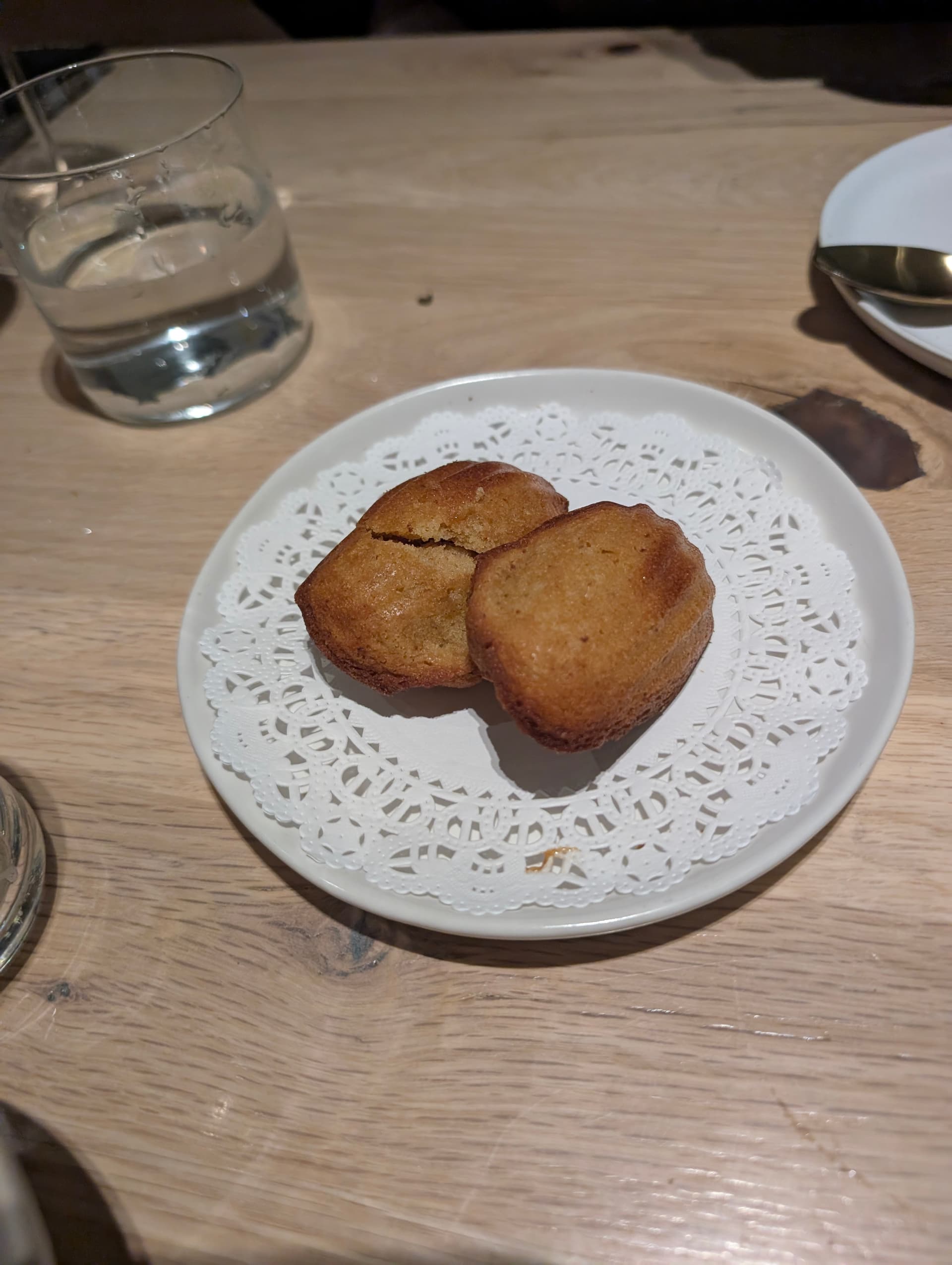
Just enough room for dessert, and I’m glad we skipped the sticky toffee pudding, despite our initial inclination. I am not a dessert-oriented eater but I love figs, and I really loved this smooth and mildly-sweet gelato. The honey’s depth was also appreciated, as were the warm and fluffy madeleines. Top 3 dish.
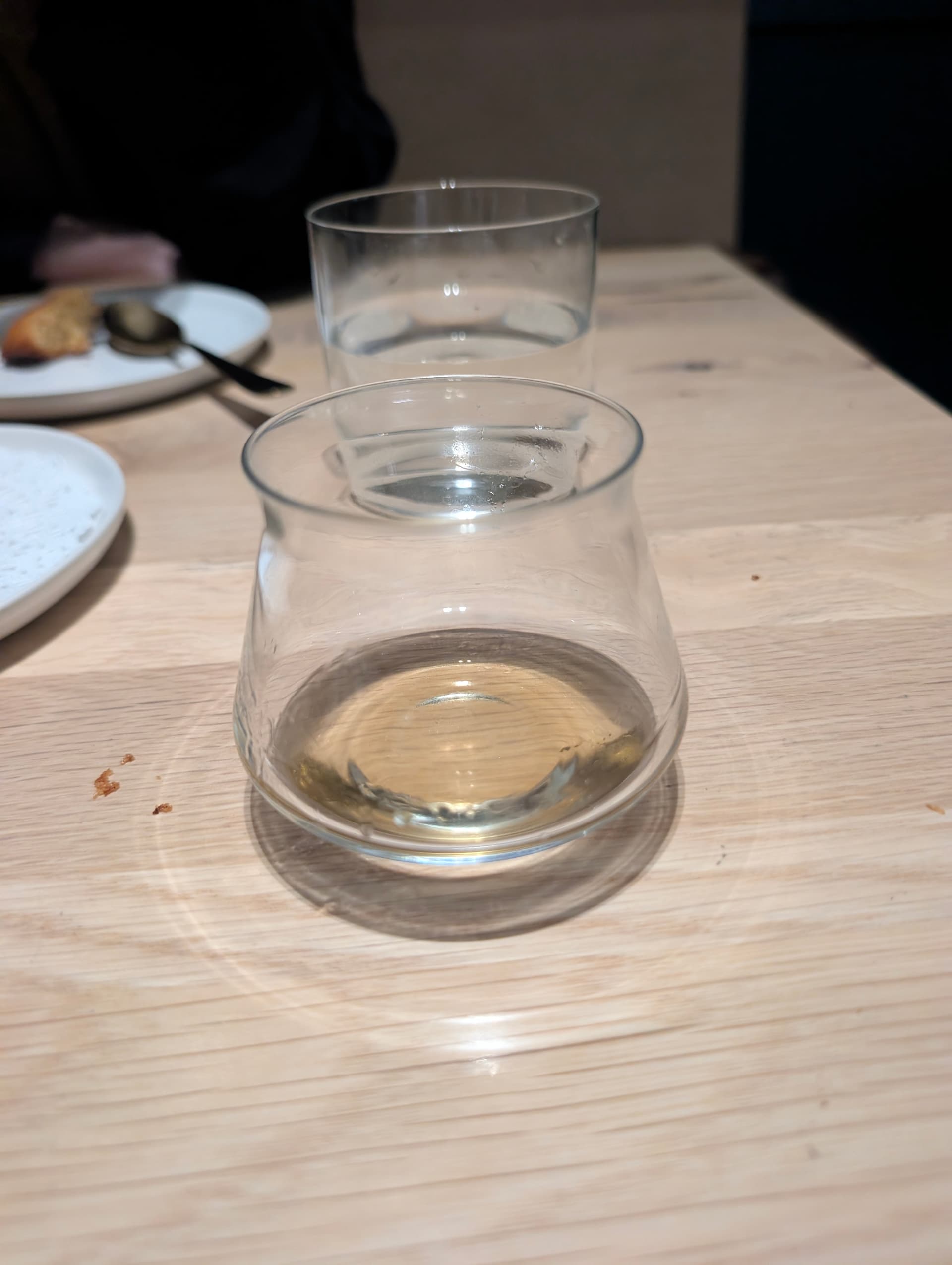
Had a nice chat with Miley about how the menu has developed since opening, revising through perhaps a protein-forward mains section toward vegetable counterpoints. She was very kind and sent over a potent and delicious loquat-soaked vodka liqueur that almost pushed over the edge. Its small pour was welcomed, and was exceedingly tasty.
This was a pricy dinner for two, though it was a pretty big order for that number. But its quality certainly warrants a schlep: The care and attention paid to sourcing ingredients, and their subsequent preparation, earn Tomat’s team a worthy place among LA’s new restaurants, especially from first-timer chef-restauranteurs that have had limited experience in professional kitchens. Though its location is inconvenient for many whom, at least on this board, the restaurant would love to reach, the difficulty of its location, and its almost plain physical space at the foot of a newer retail development project that has a decidedly corporate appearance, is almost perfect LA. In some way, it eschews merely aesthetic gestures toward a neighborhood restaurant concept and cheap paeans to destination-based establishments. Worth your time and your stomach beyond convenience to LAX. This is great food.